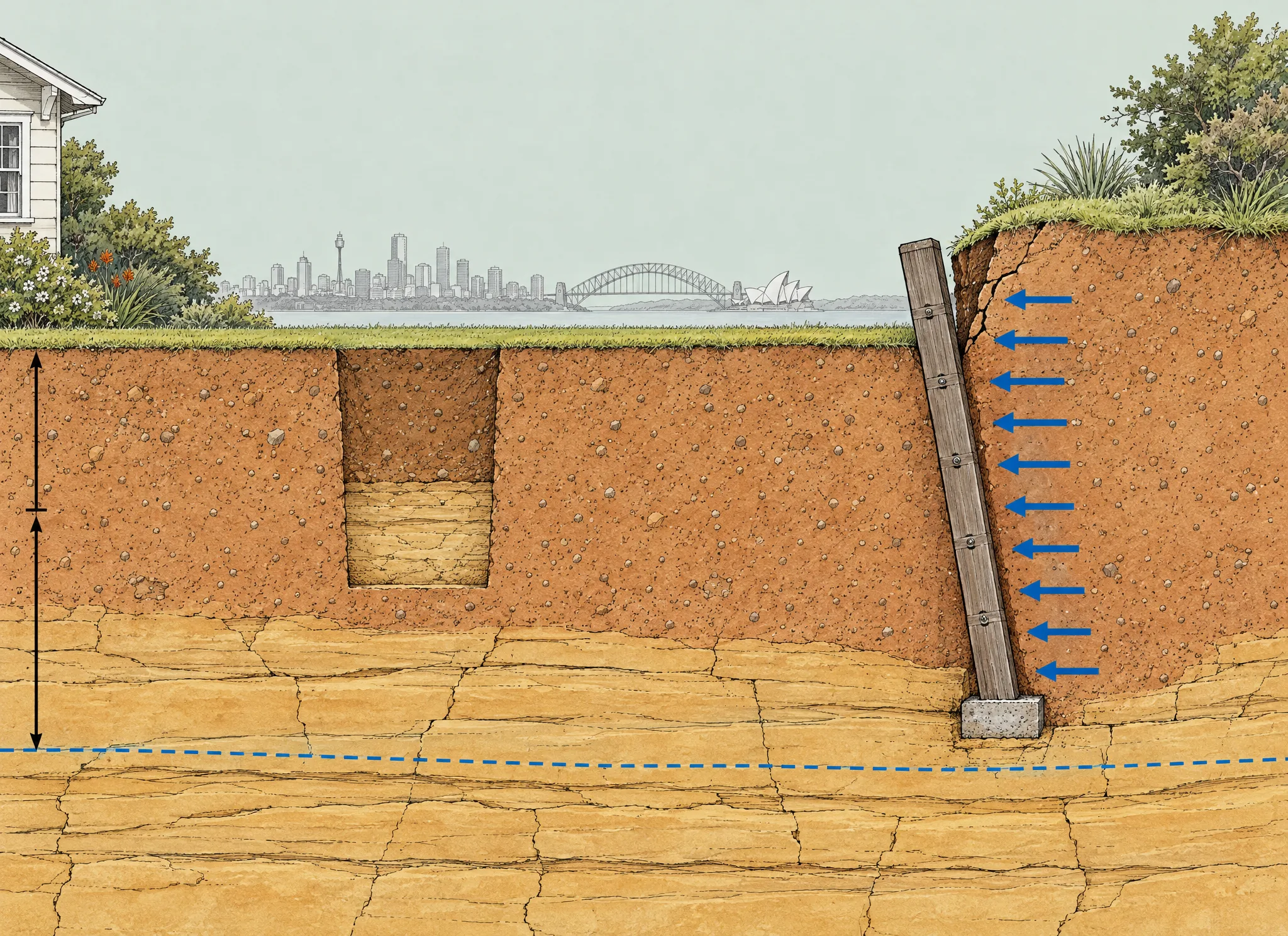
A retaining wall that has started leaning, cracking, bowing or breaking apart is something worth investigating sooner rather than later. These walls hold back soil, support changes in ground level and help keep outdoor areas usable. When they begin to fail, the effects can extend beyond the wall itself.
Sydney Retaining Wall Repair helps property owners find local contractors for retaining wall repairs, replacement and stabilisation. Whether you have an ageing timber sleeper wall, a damaged concrete retaining wall or a masonry wall showing signs of movement, we can help you take the next step.
Sydney properties present a wide range of retaining wall challenges. Steep residential blocks, established gardens, heavy rainfall, reactive soils and restricted access can all influence the condition of a wall and the options available for repairing it.
You do not need to know exactly what is wrong before getting in touch. Describe what you have noticed, provide your suburb and include photographs if you can take them safely. A contractor can then discuss the situation and determine whether a property inspection is needed.
Retaining wall services
Retaining wall problems come in many forms. Some walls deteriorate gradually as timber decays or drainage becomes less effective. Others develop noticeable movement following prolonged rainfall, changes to surrounding ground levels or additional pressure behind the structure. The services below cover common repair and replacement needs, from investigating an existing defect to rebuilding a wall that has reached the end of its useful life. Select the service that best describes your situation, or send us a general enquiry if you are unsure.
Retaining walls are often tucked behind garden beds, fences or outdoor structures, which makes it easy to overlook gradual changes. A wall may appear to be doing its job until a noticeable crack develops or the ground behind it begins to move. Paying attention to smaller warning signs can help you identify a problem before it becomes more extensive.
One of the clearest signs is movement away from the soil being retained. A wall that was previously upright may start tilting forward, or individual sections may develop a pronounced bulge. These changes can indicate that the structure is no longer resisting the forces acting against it as intended.
Cracking is another reason to investigate. Small surface cracks do not necessarily mean that a wall is structurally unsound, but widening cracks, separated masonry blocks and displacement between adjoining sections deserve closer attention. Changes that become more obvious after wet weather can also be significant.
Timber retaining walls have their own warning signs. Soft or crumbling sleepers, deteriorating posts and gaps around connections may indicate that the material has lost strength. Timber that looks reasonably sound from the front can sometimes be deteriorating where it meets the soil.
Look at the surrounding ground as well. Depressions behind the wall, unusually wet garden beds, displaced paving and changes to nearby fences may provide clues about what is happening below the surface. Water escaping through unexpected openings can also warrant investigation.
Avoid pushing against a leaning wall or digging around its base to see how stable it is. Disturbing a compromised retaining structure can make an existing problem worse.
If movement appears sudden or substantial, keep people away from the affected area and seek urgent professional assistance. For less immediate concerns, photographs taken safely from a distance can help document changes while you arrange an assessment.
The process of repairing a retaining wall begins with understanding why the existing structure is no longer performing properly. Although two walls may show similar cracks or movement, their underlying problems can be quite different. A repair method should address the cause of the damage rather than simply conceal the visible symptoms.
During an assessment, the contractor may examine the wall's alignment, construction material, connections, drainage and surrounding ground. The height of the retained soil and the presence of nearby structures can influence the loads that the wall needs to support.
Where the damage is limited and the remaining structure is suitable, a repair may involve replacing deteriorated components, restoring appropriate drainage or rebuilding an affected section. The contractor will need to establish whether these changes can be made without compromising the stability of the rest of the wall.
More substantial problems can require an engineered solution. If the retaining wall supports a building platform, driveway, neighbouring land or another significant structure, additional professional advice may be necessary before work proceeds.
Site preparation is an important part of the process. Access arrangements, underground services, vegetation and neighbouring property boundaries all need consideration. Temporary support may also be required where removing existing material could expose unstable ground.
Once the cause of failure has been established, the contractor can discuss the proposed scope of work. This should include how the damaged area will be addressed, what materials are intended for use and whether drainage improvements form part of the repair.
After the work, the condition of surrounding areas and the way water moves through the site remain important. A retaining structure needs to work as part of the wider landscape, rather than as an isolated feature.
You can ask the contractor to explain the repair in plain language before agreeing to proceed. Understanding what is being corrected makes it easier to compare options and recognise the difference between a cosmetic improvement and a structural repair.
What Affects the Cost of Retaining Wall Repair in Sydney?
The cost of repairing a retaining wall depends on more than its visible length. A contractor needs to consider the amount of soil being retained, the existing construction, the underlying cause of failure and the practical requirements of working at the property.
Wall height is particularly important because taller structures generally need to resist greater forces. A relatively low garden retaining wall can present a different construction task from a wall supporting several changes in ground level across a residential block.
The existing material also influences the repair. Timber sleepers, concrete sleepers, masonry blocks and natural stone each require different tools, construction techniques and replacement components. Some older materials may be difficult to match or unsuitable for reuse.
Access can significantly affect the amount of work involved. Sydney properties with narrow side passages, steep paths or limited parking may require different arrangements for moving materials and removing waste. A wall located behind an established home is not always as accessible as one beside a driveway.
Drainage requirements can add another layer of complexity. If trapped water has contributed to the failure, repairing the face of the wall alone may leave the original problem unresolved. The contractor may need to include additional excavation, drainage materials or changes to the surrounding landscape.
Engineering, approval requirements, temporary support and the removal of unsuitable soil can also influence the overall scope. These considerations become especially relevant when a wall supports neighbouring property or important structures.
When reviewing an estimate, look beyond the final figure. Ask what the proposed work includes, how unexpected ground conditions will be handled and whether reinstating disturbed areas is part of the agreement.
Providing accurate photographs and property information can help the initial discussion, although a site inspection may still be necessary before the contractor can establish a reliable scope. Request an assessment to understand the work relevant to your particular wall.
Sydney contains a varied landscape, from coastal headlands and sandstone ridges to areas with deeper clay soils and extensive residential development. The conditions beneath one property can differ considerably from those found only a few suburbs away. These differences matter when a retaining wall begins to deteriorate.
Water is one of the most important factors. Prolonged rainfall can increase the amount of water held within the soil behind a retaining structure. Where drainage is inadequate, this can place additional pressure on the wall and contribute to movement.
Some properties contain clay-rich soils that respond to changes in moisture. Ground movement associated with wet and dry periods can affect foundations and retaining structures. The degree of movement depends on the actual soil conditions, which cannot always be established by looking at the surface.
Sandstone landscapes present different considerations. On sloping properties, retaining walls may sit alongside exposed rock, shallow soil or previously excavated building platforms. The relationship between the retaining structure and the underlying ground needs to be understood before choosing a repair method.
Coastal environments can introduce additional material durability concerns. Moisture, exposure and airborne salt may affect certain metal components, while timber in persistently damp conditions can deteriorate over time.
Established gardens also change as they mature. Growing vegetation, altered garden beds and accumulated organic material can influence drainage or introduce additional loads. New paving, sheds and driveway modifications may change how water reaches an existing wall.
These factors explain why a solution that worked well at one Sydney property may not be suitable at another. A contractor needs to consider the individual site rather than select a repair solely on the basis of suburb or wall material.
If your wall has changed following a period of heavy rain or recent landscaping, mention this when making an enquiry. Knowing when the problem first appeared may help guide the assessment of possible contributing factors.
Should You Repair or Replace Your Retaining Wall?
Deciding between retaining wall repair and replacement is not always straightforward. Property owners understandably want to preserve a structure that still looks usable, but the appearance of the exposed surface does not necessarily reveal its remaining strength.
A targeted repair may be suitable when deterioration is confined to a specific area and the rest of the wall is in adequate condition. For example, a limited defect affecting part of a larger retaining system may be repairable if the underlying structure and supporting ground remain suitable.
Replacement becomes more relevant when deterioration is widespread, important structural components have failed or the existing wall was not designed for the loads it now carries. Multiple defects across the same structure may make isolated repairs less dependable.
Older timber walls deserve particular attention in this regard. Replacing a visibly damaged sleeper does not resolve the problem if several buried posts have also deteriorated. Similarly, repairing mortar joints on a masonry wall will not necessarily address movement caused by foundation problems.
The intended future use of the property can influence the decision. A homeowner planning to remodel a backyard, install a new outdoor structure or change ground levels may need to consider whether the existing wall is appropriate for those changes.
It is also worth discussing the expected durability of each option with the contractor. A repair that preserves sound material can make sense, while a properly planned replacement may be preferable where repeated intervention would otherwise be likely.
Ask whether the proposed solution addresses drainage, soil pressure and any additional loads behind the wall. These considerations are important regardless of whether the original structure is retained.
A decision should be based on the condition of the wall and its ability to perform the required retaining function. The contractor can explain which elements may remain, which need attention and whether further engineering assessment is necessary before a final repair or replacement plan is agreed.
Choosing a Contractor for Retaining Wall Repairs
Finding someone to repair a retaining wall involves more than choosing a business that can supply the right construction materials. The person responsible for the work needs to understand the particular demands of retaining structures and recognise when additional professional input is required.
Begin by describing the problem accurately. Mention whether the wall is leaning, cracking, losing material or allowing soil to escape. If another structure sits close to it, include that information as well. This helps establish the nature of the enquiry before more detailed discussions take place.
Ask the contractor how the cause of the damage will be investigated. A considered explanation should account for the existing wall, the retained ground and the conditions that may have contributed to failure. Be cautious about accepting a solution that focuses only on appearance when there is obvious structural movement.
Check that the contractor holds any licences and insurance appropriate to the proposed work. Requirements can depend on the project, and you should verify the relevant details before entering into an agreement. Where engineering or approvals are needed, establish who will arrange them.
A written scope of work is useful for avoiding misunderstandings. It should clarify the intended repairs, materials, drainage provisions, waste removal and any assumptions about the condition of the site. Ask how changes will be managed if unexpected problems are discovered during excavation.
Boundary walls may require additional conversations with neighbours, property managers or other interested parties. Confirming ownership and access arrangements before construction can prevent unnecessary complications.
Communication matters throughout the project. You should be able to discuss the proposed work directly with the contractor and receive answers to reasonable questions about the repair.
Sydney Retaining Wall Repair provides a starting point for that conversation. Tell us about your property, the retaining wall and the damage you have noticed so an independent local contractor can discuss the next steps with you.
Our focus is helping Sydney property owners deal with retaining wall problems without having to work out every construction detail themselves. From older garden walls on the Northern Beaches to structural retaining walls supporting sloping properties elsewhere in Sydney, we understand that finding the right starting point can make a difficult situation easier to manage.
Sydney Retaining Wall Repair is a referral service. We receive your enquiry and pass it to an independent local contractor, who contacts you, assesses the retaining wall, provides an estimate and carries out any agreed work. We do not perform the construction or repair work ourselves.
We believe property owners should have the opportunity to understand what has gone wrong before committing to a repair. A retaining wall may need a relatively contained repair, more substantial structural work or complete replacement. The appropriate solution depends on the condition of the existing structure and the ground it supports.
Our approach starts with listening to what you have noticed. Information about the wall's material, height, location, approximate age and visible damage can help the contractor prepare for an initial conversation. There is no need to diagnose the structural problem yourself.
With a focus on the Northern Beaches and surrounding Sydney regions, we aim to make the process of connecting with retaining wall contractors more straightforward for residential and property management customers.
Why property owners use this service
Focused on retaining wall problems
Our service is specifically concerned with retaining wall enquiries. You can describe the damage without needing to navigate a broad range of unrelated construction services.
Local Sydney coverage
We help connect property owners with independent contractors serving several Sydney regions. Local ground conditions and property access can be important considerations in retaining wall work.
A simple enquiry process
Start by telling us where the wall is and what has changed. Photographs and approximate measurements can help, but you do not need technical drawings to make an initial enquiry.
Repair and replacement options
Not every damaged retaining wall needs to be completely rebuilt. A contractor can consider whether the remaining structure is suitable for repair or whether replacement offers a more dependable solution.
Direct communication with the contractor
Discuss the proposed work, materials, estimate and scheduling directly with the contractor responsible for the project. This helps keep important construction decisions with the person undertaking the work.
Suitable for different property types
We accept enquiries involving residential gardens, rental properties, driveways, boundary walls and other retaining structures. The contractor can assess the particular demands of the site.
Understand the problem before deciding
Visible damage is not always enough to establish why a wall is failing. An appropriate assessment can help distinguish surface deterioration from a more significant structural issue.
Clear next steps
You can begin with a description of the problem rather than a fully developed repair plan. The contractor can explain what further information or professional assessment may be required.
We accept retaining wall enquiries across Sydney, with particular attention to the Northern Beaches, North Shore, Hills District and Western Sydney. Each region has its own mix of property styles, ground conditions and access challenges, which can influence how a contractor approaches a damaged retaining structure.
On the Northern Beaches, steep blocks around established residential areas and properties with terraced gardens can make retaining walls an important part of everyday access. Across the North Shore, mature landscaping, narrow side passages and older boundary walls often need careful consideration.
In the Hills District, retaining structures commonly form part of landscaped yards, split-level homes and residential developments built across changing ground levels. Western Sydney includes both long-established neighbourhoods and newer housing estates, where retaining walls may support driveways, building platforms and adjoining residential lots.
The location of your property is useful when making an enquiry, but so is the position of the wall within your property. A retaining wall beside a driveway presents different practical challenges from one at the bottom of a garden or directly beneath an elevated outdoor area.
If you are concerned about a wall at your Sydney property, provide your suburb and a short explanation of the damage. We can use that information to help connect your request with an independent contractor serving the area.
Common questions
Can a damaged retaining wall in Sydney be repaired without rebuilding it?
Some retaining walls can be repaired while preserving sound parts of the original structure. A contractor needs to assess the extent of deterioration, the condition of the supporting components and the reason the wall has failed before recommending this approach.
How do I arrange a retaining wall assessment through this service?
Send us your property location and a description of the retaining wall problem. We can pass your enquiry to an independent local contractor, who can contact you to discuss an assessment and estimate.
Is a retaining wall that moves after heavy rain a concern?
Movement following rainfall may indicate increased water pressure, drainage problems or changes within the supporting ground. Keep away from a visibly unstable structure and arrange professional assessment, particularly if the movement is continuing.
Can I enquire about a retaining wall at my rental property?
Yes, landlords and property managers can submit enquiries about damaged retaining structures. Include any relevant access arrangements and information about areas of the property that may be affected.
What photographs are useful when reporting retaining wall damage?
If it is safe, take photographs showing the overall wall, visible defects and the ground surrounding it. Images showing nearby driveways, fences or buildings can provide helpful context without requiring you to approach an unstable section.
Tell us about your retaining wall
Concerned about a retaining wall at your Sydney property? Send us the details and we can help connect your enquiry with a local contractor.